More Than a Test: Helping Patients Find a Path Forward
Jennifer Noonan, VP of Clinical Strategy — For someone living with unexplained symptoms, finding an answer can mean much more than putting a name to an illness. It can mean understanding what is happening in their body, knowing what questions to ask, and having a clearer path forward.
After nearly three decades in nursing, I have seen how much uncertainty patients and families carry while searching for answers. I’ve also seen how easily that uncertainty can become an assumption about the person: anxious, difficult, or not following the care plan. When this happens, we risk allowing a label to shape our understanding before we have adequately explored what the patient has been experiencing.
That is one of the most important reasons diagnostic testing matters. The National Academies of Sciences, Engineering, and Medicine estimates that 5% of U.S. adults seeking outpatient care experience an error in diagnostic testing each year, and concluded that most people will experience at least one during their lifetime.
Answers That Can Change the Path Forward
When used thoughtfully, diagnostic testing complements a careful history, physical examination, and most importantly, listening to the patient. Depending on the clinical questions, the evaluation might include laboratory work, imaging, genetic testing, or another specialized assessment.
The goal is not simply to order more tests. More testing does not equal better care. The goal is to choose testing that answers a meaningful question: What are we trying to understand and will the results change or shape this person’s care?
For people living with rare or chronic conditions, finding an answer may require several specialists or travel to one of only a few treatment centers in the country. While a diagnosis can provide some direction, uncertainty may remain. Our patients deserve an explanation of what a result will tell us about them, what it will not tell us, and what to expect for next steps.
Listening Is Part of the Evaluation
The World Health Organization reports that diagnostic errors account for 16% of preventable patient harm. This report goes on to explain that errors can occur during history-taking, testing, communication, follow-up and reevaluation.
Recently, while navigating complex care in my own life alongside people I love, I am reminded of how much preparation happens before an appointment: organizing the timeline, remembering any changes since last visit, and sometimes rehearsing and carefully choosing how to explain something clearly enough that its importance is recognized and then shared by the care team.
Even with a nursing background, I am finding myself exhausted with the process. It has made me think about people doing this same work without any clinical training, reliable transportation, or even someone to sit beside them to help make that next phone call.
Patients and caregivers bring information a test will never capture. That information is not measured in diastolic or mg/kg – but in asking these questions: What has changed? How are symptoms affecting daily life? What feels different from the person’s usual baseline? Those observations belong within the diagnostic process, not as an afterthought.
Looking Beyond the Label
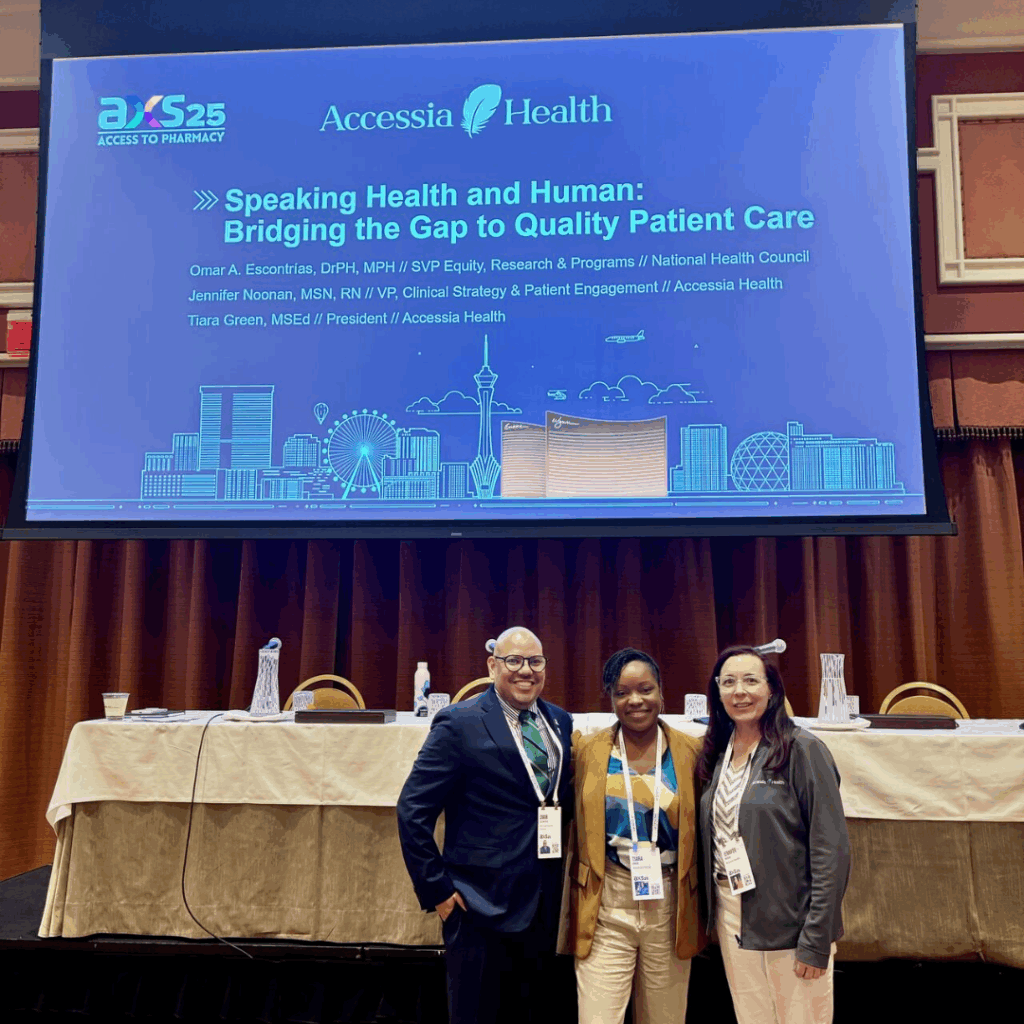
At the recent NASP inSPire meeting, I moderated a discussion about social determinants of health in specialty pharmacy and how a person’s circumstances affect whether treatment can be accessed and sustained. The same is true of diagnostic care.
A missed appointment may mean that the test was only available during their working hours. An incomplete evaluation may reflect cost or unsustainable travel. Someone described as “non-adherent” may be struggling with an unresolved symptom or a plan of care that never fits the reality of their life.
Before drawing a conclusion about the person, we should ask, “what happened?” We should also ask: “When we miss an opportunity to investigate a symptom or address a barrier, what might that mean for the person’s health over time?”
Turning Information into Care
The diagnostic process requires follow-through. Patients should know who will review their results, how they will receive them, and whom to contact if they do not hear back by the designated timeframe we give them.
Our patients should also feel comfortable asking: “What questions will this test help to answer for my individualized care? What could the results mean for my ongoing care? If this test does not explain my symptoms, what will happen next?”
Diagnostic testing matters because people deserve care informed by both evidence and their experience. Behind every diagnostic order is a person trying to understand what is happening – and how to move forward.
Being able to reflect on that has changed how I respond when someone’s behavior is difficult to understand. I’m working hard to pause before assigning meaning and instead ask whether there is another question yet to be considered.
Whether you’re providing care or seeking answers, the next step is the same: keep asking questions, communicate openly, and make sure every concern has a clear path toward follow-up.
About Jennifer Noonan: Jennifer Noonan is a dedicated healthcare professional who joined Accessia Health as the clinical program director in April 2021, bringing with 25+ years of clinical nursing experience. Her commitment and expertise quickly led to a promotion to senior director of clinical programs and compliance. With a rich background in clinical practice and management across diverse healthcare settings, Jennifer possesses a deep understanding of program design and the delivery of services within highly regulated environments.
As Vice President of Clinical Strategy at Accessia Health, she brings clarity and compassion to the complex landscape of rare and chronic disease support, developing patient programs, building national partnerships, and amplifying the patient voice.