Alpha-1: Understand The Diagnosis and Resources
Maybe you’ve been short of breath for years and were told it was asthma. Maybe a parent was diagnosed with COPD and never smoked a day in their life. Or maybe a loved one has unexplained liver problems that no one can quite pin down. Any of these stories could point to a lesser-known inherited condition called Alpha-1. Here is what everyone should know about it, and how Accessia Health can help.
What is Alpha-1?
Alpha-1 antitrypsin deficiency (often shortened to AATD or simply Alpha-1) is an inherited condition. Your liver makes a protein called alpha-1 antitrypsin (AAT) that travels through the bloodstream to your lungs and helps shield them from damage. In people with Alpha-1, changes in a gene called SERPINA1 mean the body makes too little working AAT, or none at all. Without enough of the protein, the lungs can become damaged, and a buildup of the abnormal protein in the liver can harm that organ too.
An estimated 100,000 Americans have Alpha-1, yet fewer than 12,000 of them are clinically recognized, which means most people with the condition (and their family members, since it is genetic) don’t know they have it. Researchers estimate the condition affects roughly 1 in 3,500 people in the United States.
Symptoms: What to Watch For
Alpha-1 can show up in more than one part of the body.
- Lungs: The most common symptom is shortness of breath after physical activity, sometimes with wheezing. A chronic cough and frequent lung infections are also common.
- Liver: Signs can include yellowing of the skin or eyes (jaundice) and swelling in the abdomen.
- Other areas: Alpha-1 also raises the risk of skin problems (panniculitis) and inflammation of the blood vessels (vasculitis). Fatigue and weight loss can occur as well.
Lung problems almost always occur in adults, while liver and skin problems can appear in adults and children. Some people with Alpha-1 never develop problems at all.
Getting Answers & A Diagnosis
The symptoms look a lot like asthma and other forms of COPD, and many doctors have limited awareness of Alpha-1, so the condition is frequently under-recognized. The average delay between a person’s first symptoms and a correct diagnosis has been estimated at more than seven years, and in one survey, 43.7% of people with severe deficiency saw at least three doctors before getting the right answer.
The good news is that Alpha-1 can be diagnosed through a simple laboratory test. A blood test can reveal low AAT levels, and genetic testing confirms the diagnosis. Because a blood level alone can miss people who carry just one altered gene, it is best paired with a second method, such as genotyping.
Testing is recommended for anyone with COPD, emphysema or bronchiectasis; people with unexplained liver disease; those with a family history of COPD or liver disease; and family members of someone with an abnormal Alpha-1 genotype.
Because Alpha-1 is inherited, a diagnosis can also provide important health information for family members. If you or a loved one has been diagnosed, consider asking your healthcare team whether parents, siblings, children, or other relatives should be tested. Identifying Alpha-1 early can help family members better understand their health risks and take steps to protect their lung and liver health, even if they aren’t experiencing symptoms.
Managed Living with Alpha-1
There is currently no cure for Alpha-1, but once it is diagnosed, steps can be taken to control symptoms and improve quality of life.
- Lifestyle changes: Quitting smoking and other lifestyle changes help improve outcomes for people with Alpha-1. Quitting also needs to happen before a person starts augmentation therapy.
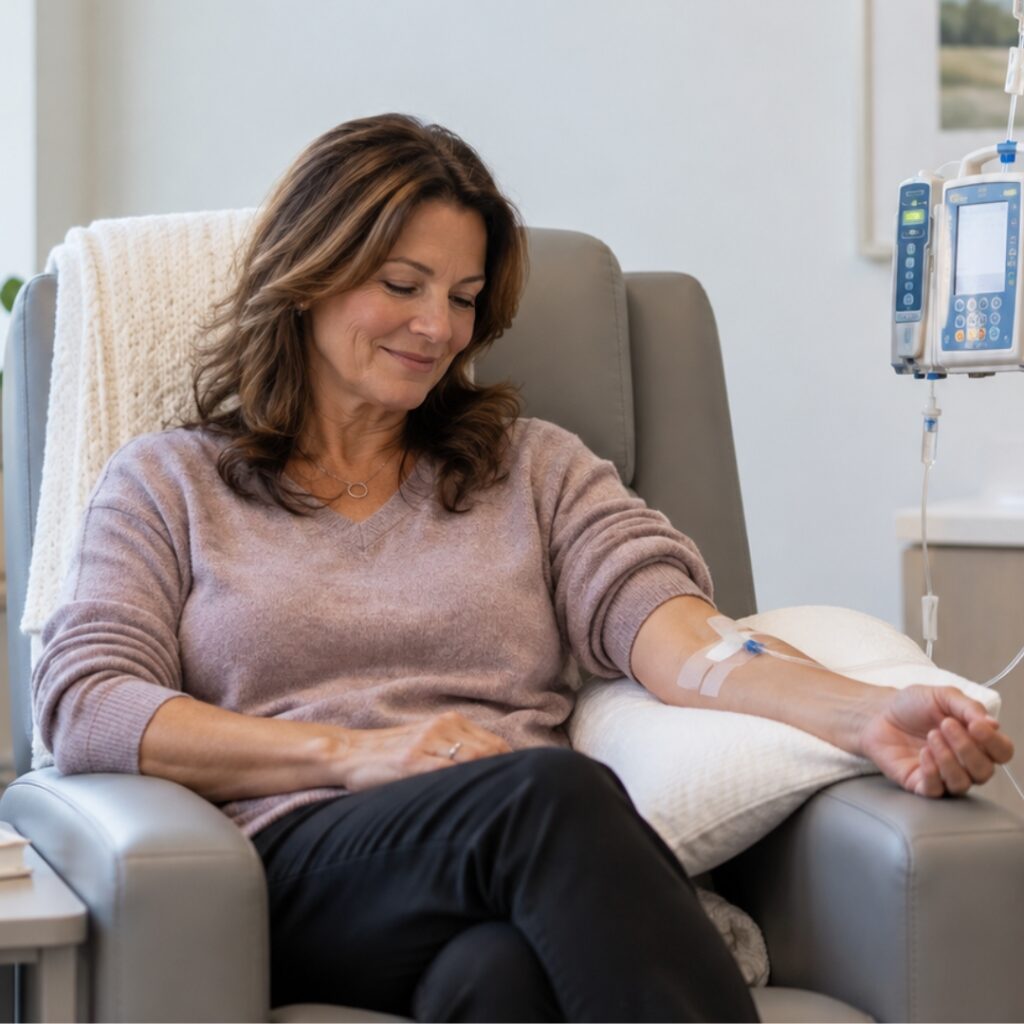
- Augmentation therapy: This involves infusions of AAT purified from pooled donor plasma and is the only specific treatment shown to slow the progression of emphysema in people with Alpha-1.
- Standard lung care: Medications to control symptoms and regular care from a lung specialist (pulmonologist) are also part of a typical plan.
- Looking ahead: Researchers are investigating newer approaches, including gene therapy.
You Don’t Have to Navigate This Condition Alone
A diagnosis can feel overwhelming, and so can the long road to getting one. That’s why Accessia Health’s Alpha-1 Patient Program provides financial assistance around copays, medical expenses, insurance premiums, and travel expenses for people living with this condition and the families who care about them.
Do you have Alpha-1, or do you love someone who does? Apply today and let us walk alongside you.